Operating microscope
High magnification provides a detailed view of the tooth’s internal anatomy.
Precision treatment using a microscope, with a focus on preserving the tooth and its natural structure.
Learn about the treatment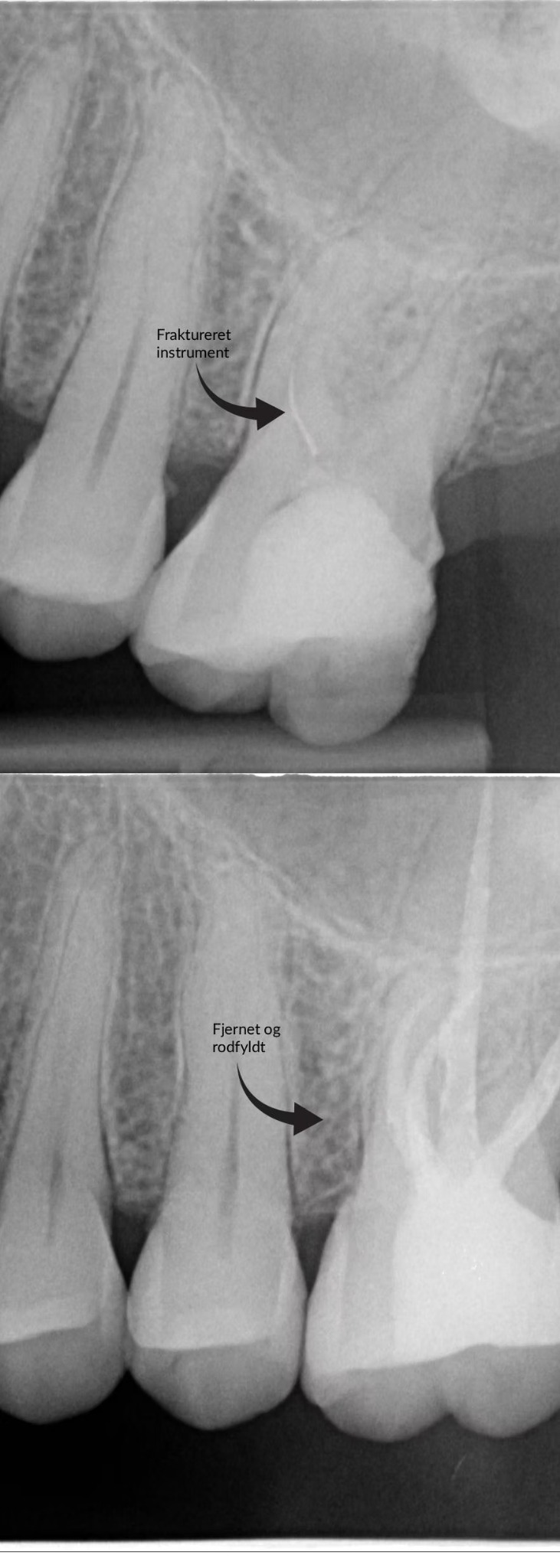
Occasionally, an instrument may fracture inside a root canal, or an existing post may obstruct access during retreatment. In many cases, these challenges can be managed with advanced endodontic techniques and specialised equipment.
High magnification provides a detailed view of the tooth’s internal anatomy.
Specialised instruments can be used to loosen fractured instruments and posts in a controlled manner.
The aim is to preserve as much sound tooth structure as possible.
Treatment is assessed individually according to the fragment’s position, canal anatomy and the tooth’s prognosis.
Root canal instruments are very fine and flexible so they can follow the tooth’s natural anatomy. In narrow, curved or calcified canals, an instrument may occasionally fracture and remain inside the canal.
A fractured instrument does not necessarily cause symptoms, but it may prevent thorough cleaning and disinfection of the root canal system. Bacteria remaining beyond the fragment can contribute to persistent infection or impaired healing.
With an operating microscope, ultrasonic instruments and advanced techniques, it is often possible to locate and remove the fragment conservatively. In some cases, bypassing or safely retaining the fragment may be preferable, depending on the anatomy and clinical circumstances.
A post may have been placed in a tooth that has previously received root canal treatment to support a core or crown. If retreatment is later required, removing the post is often necessary to regain access to the canals.
Post removal requires precision to minimise stress on the tooth and reduce the risk of cracks or other damage. Microscopy and ultrasonics can help loosen the post in a controlled manner while preserving sound tooth structure.
Complex retreatment often requires high magnification, specialised instruments and detailed diagnostics. Modern endodontic techniques make it possible to manage many cases that might previously have resulted in tooth loss.
The goal is always to optimise healing, reduce symptoms and preserve the tooth over the long term.
Drag the slider left or right to compare the radiographs before and after treatment.
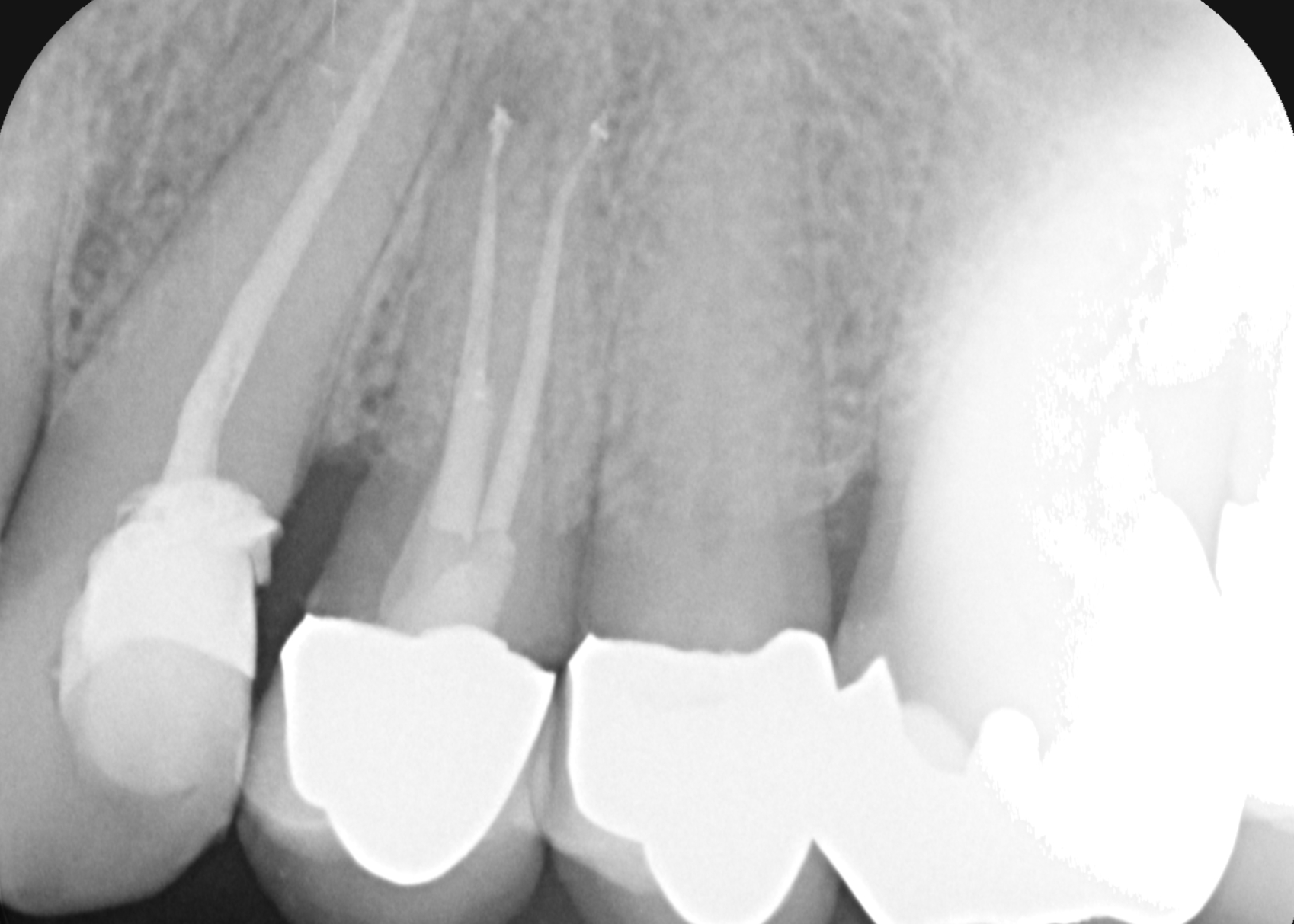
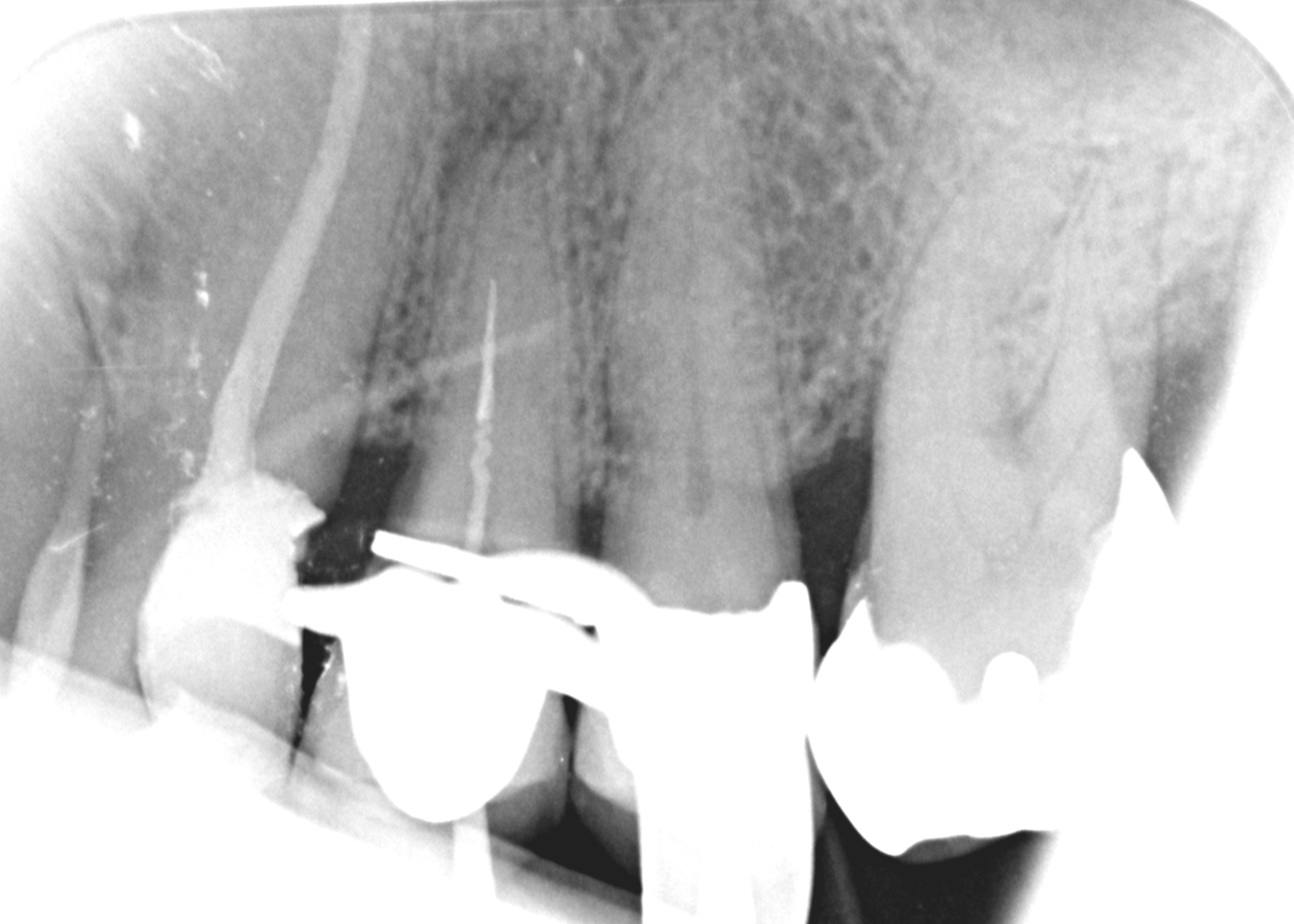
The radiographs were taken at different angles and cannot therefore be aligned precisely.
Refer for assessment and treatment focused on precision and tooth preservation.
Refer a patient