Root canal retreatment
A tooth that has previously received root canal treatment may sometimes need further treatment. The aim is to eliminate infection and preserve your natural tooth.
Learn about retreatmentWhen a previous root canal treatment does not heal as expected
A properly performed root canal treatment can often preserve a tooth for life. Sometimes, however, healing does not progress as expected, and symptoms or infection may appear months or even years later. In these cases, retreatment may offer a way to save the tooth and restore health around its root.
Retreatment can help relieve pain, eliminate infection and promote healing. If a tooth that has previously received root canal treatment is causing discomfort, it should be assessed by a dentist or an endodontic specialist.
Several factors may explain why a tooth does not heal adequately after its initial root canal treatment:
- Very narrow or curved root canals may have been difficult to clean thoroughly during the initial treatment.
- Complex root anatomy may have made it difficult to locate every canal.
- The final crown or restoration may not have been placed promptly after treatment.
- The filling or crown may not have sealed the tooth adequately, allowing bacteria to enter again.
VIDEO · ROOT CANAL RETREATMENT
The video is only loaded from YouTube when you press play.
Even a tooth that was previously free of symptoms can develop problems
A tooth that has received root canal treatment can function without problems for many years and still develop new issues. This does not necessarily mean that the original treatment was unsuccessful. Over time, the tooth or its protective restoration may be affected by wear, new decay or forces during chewing. If bacteria regain access to the root canals, a new infection can develop around the root tip, sometimes without obvious symptoms at first.
It is therefore important to have the tooth examined if it becomes tender, feels different when biting or develops swelling. Possible causes include:
- New decay develops around the tooth.
- A filling or crown becomes leaky, loose or fractured.
- The tooth develops a crack or fracture.
How retreatment is performed
During retreatment, the tooth is reopened and the existing root fillings are carefully removed. The canals are then examined for missed anatomy and signs of infection. They are cleaned and disinfected again, reshaped where necessary and sealed with new root filling material.
Finally, the tooth is sealed temporarily or permanently, depending on the clinical situation. A new filling or crown is often recommended to provide a reliable seal and reduce the risk of reinfection.
Compare the radiographs
Drag the slider left or right to compare the radiographs before and after retreatment.
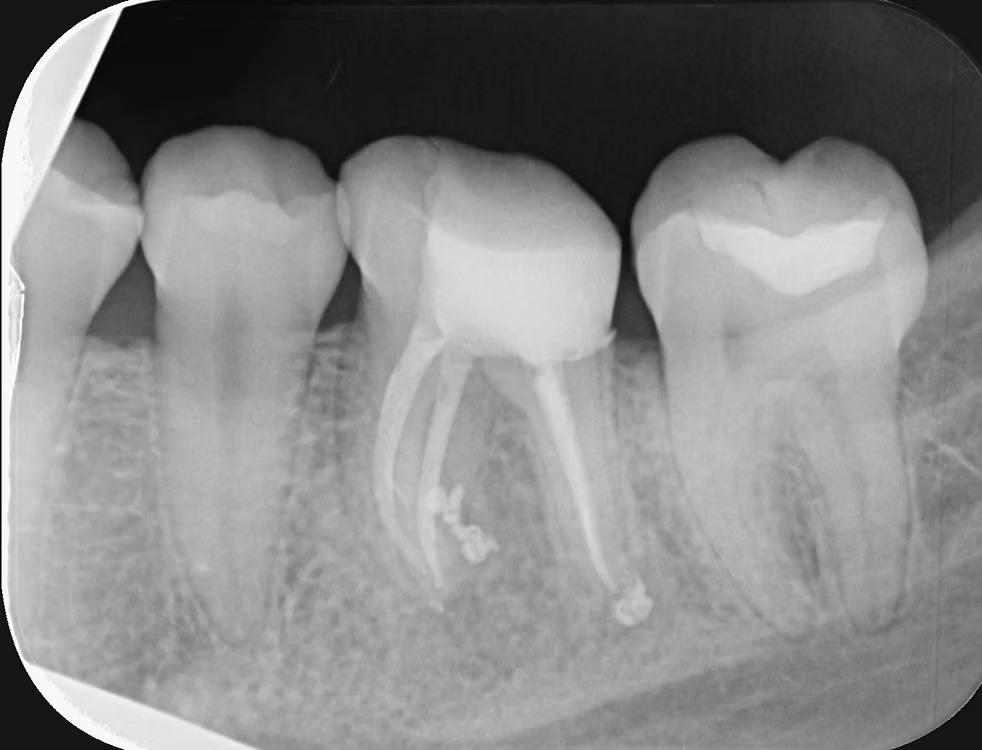
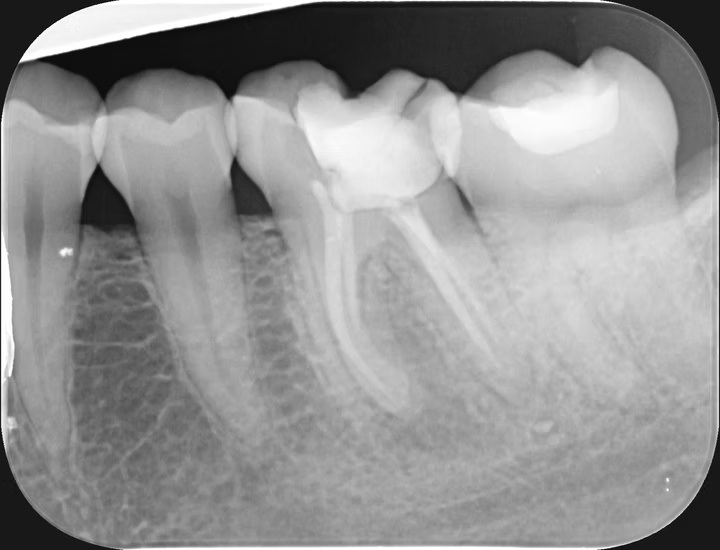
The radiographs were taken at different angles and therefore cannot be superimposed with exact anatomical alignment.
Have a tooth assessed after previous root canal treatment
If you experience pain or other symptoms from a tooth that has received root canal treatment, a clinical examination and, where indicated, radiographs can help determine whether retreatment is appropriate.